Summary: Sleep apnea in children often hides behind everyday behaviors. The most common signs include loud snoring, mouth breathing, restless sleep, pauses in breathing, bedwetting, morning headaches, and daytime problems like irritability or trouble focusing. Because these are easy to mistake for other issues, knowing what to watch for helps parents get their child evaluated sooner.
What this article covers
- What is sleep apnea in children?
- Why childhood sleep apnea is easy to miss
- Nighttime signs to watch for
- Daytime signs parents often overlook
- What causes sleep apnea in children?
- How to get your child evaluated
- Frequently asked questions
Every child snores now and then, especially with a cold. But when snoring is loud and regular, or comes with gasping, restless sleep, and daytime struggles, it can be a clue that something more is going on. Pediatric sleep apnea is more common than many parents realize, and its signs are easy to blame on other things: a busy toddler, a picky sleeper, a child who cannot sit still. This guide breaks down the nighttime and daytime signs of sleep apnea in kids, what tends to cause it, and how to know when it is time to have your child checked.
What is sleep apnea in children?
Sleep apnea in children is a sleep-related breathing disorder in which the airway becomes partly or fully blocked during sleep, causing breathing to pause or become shallow. The most common form is obstructive sleep apnea, where the soft tissues or structures around the airway narrow the passage and interrupt normal, restful breathing.
These interruptions can happen many times a night, often without fully waking the child. Each pause lowers oxygen briefly and pulls the child out of the deep, restorative sleep their growing body and brain need. According to the American Academy of Pediatrics, obstructive sleep apnea affects an estimated 1 to 5 percent of children, and it can appear at any age, from toddlers to teens. It is different from simple, occasional snoring, though snoring is often the first thing parents notice.
Why childhood sleep apnea is easy to miss
Sleep apnea looks different in children than in adults, which is why it is so often missed. Instead of the classic sleepy, tired adult, a child with disrupted sleep may become hyperactive, irritable, or unfocused. Those behaviors are frequently blamed on temperament or attention issues rather than on how the child is breathing at night.
Parents also rarely see the breathing pauses themselves, since they happen while everyone is asleep. What they do notice, snoring, restlessness, or a child who wakes up cranky, is easy to write off as normal. This mismatch between cause and symptom is one reason children can go years without a diagnosis. Learning the specific signs, grouped into what happens at night and what shows up during the day, makes the pattern much easier to recognize.
Nighttime signs to watch for
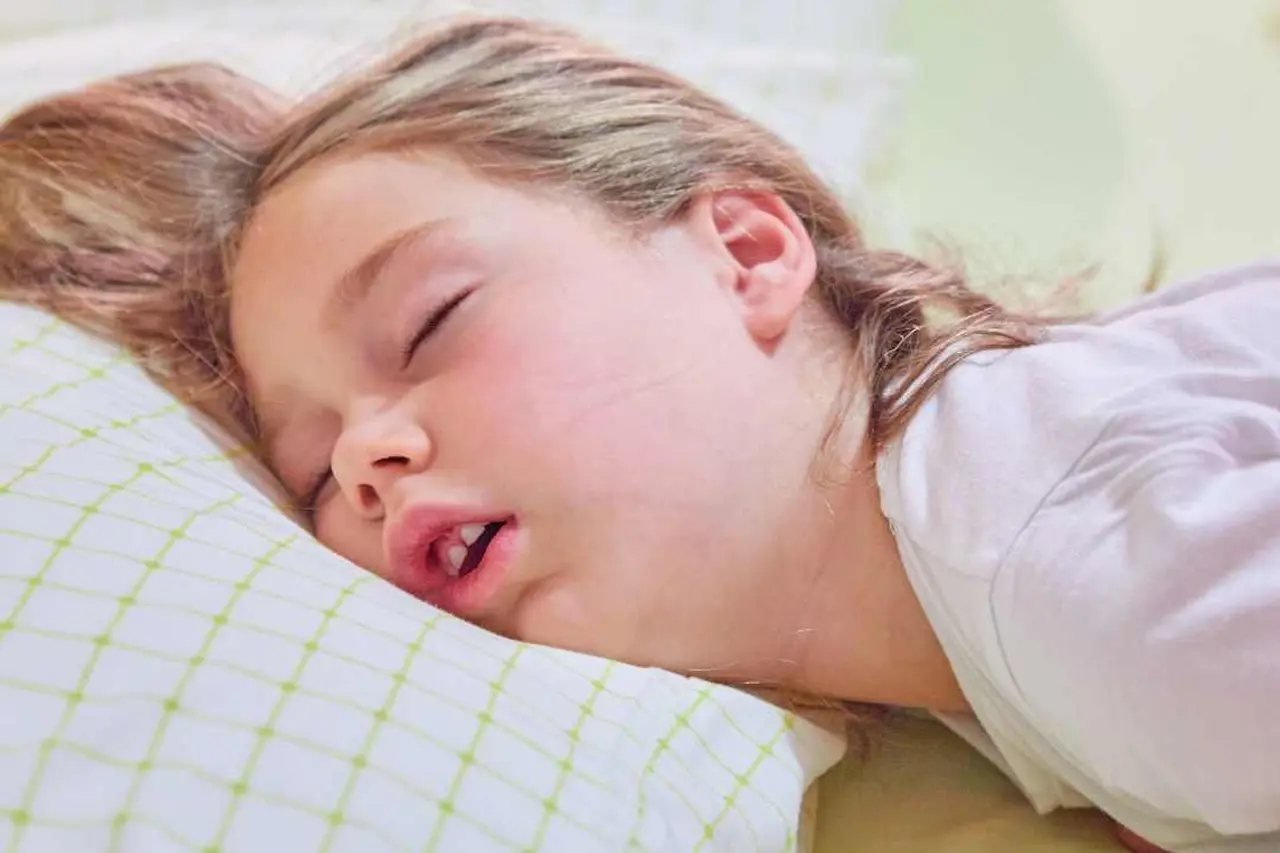
The clearest signs of sleep apnea in children appear during sleep. Loud, regular snoring is the most common, but it is not the only one. Watch for gasping or choking, visible pauses in breathing, restless tossing, sleeping in unusual positions, mouth breathing, night sweats, and bedwetting that continues past the usual age.
Snoring deserves special attention. Occasional snoring during a cold is normal, but snoring that happens most nights, especially with pauses or gasps, is worth discussing with a professional. Mouth breathing during sleep is another red flag, since it often signals that the nose or airway is not clearing air well. Bedwetting past the age it usually stops can also be linked to disrupted sleep and breathing. You can see how these airway and breathing issues in children connect, and our overview of sleep apnea and snoring explains what obstructed breathing looks like at any age.
Daytime signs parents often overlook
Because poor sleep affects the whole day, some of the most telling signs of childhood sleep apnea show up when the child is awake. Trouble concentrating, hyperactivity, mood swings, morning headaches, difficulty waking, and falling behind at school can all trace back to fragmented, low-oxygen sleep the night before.
One of the most confusing overlaps is with attention disorders. A child who is not sleeping well may be restless, impulsive, and unable to focus, behaviors that look a lot like ADHD. In some children, treating the underlying sleep and breathing problem improves these symptoms. Other daytime clues include daytime sleepiness, frequent illnesses, and slower than expected growth, since deep sleep is when much of a child’s growth and recovery happens.
What causes sleep apnea in children?
Childhood sleep apnea usually comes down to something narrowing the airway during sleep. The most common cause is enlarged tonsils and adenoids. Other contributors include underdeveloped or narrow jaws, allergies and nasal congestion, obesity, and habits like chronic mouth breathing that affect how the face and airway develop.
Enlarged tonsils and adenoids are the leading cause in young children, which is why an ear, nose, and throat evaluation is often part of the picture. But the shape and size of the jaws matter too. When the upper jaw is narrow or the lower jaw sits back, there is less room for the airway and the tongue has less space to rest. Approaches that gently widen the palate, such as palatal expansion, and myofunctional therapy that retrains the tongue and facial muscles, are non-surgical options that address these structural and habit-based causes. The right approach depends on what is driving each child’s airway obstruction.
How to get your child evaluated
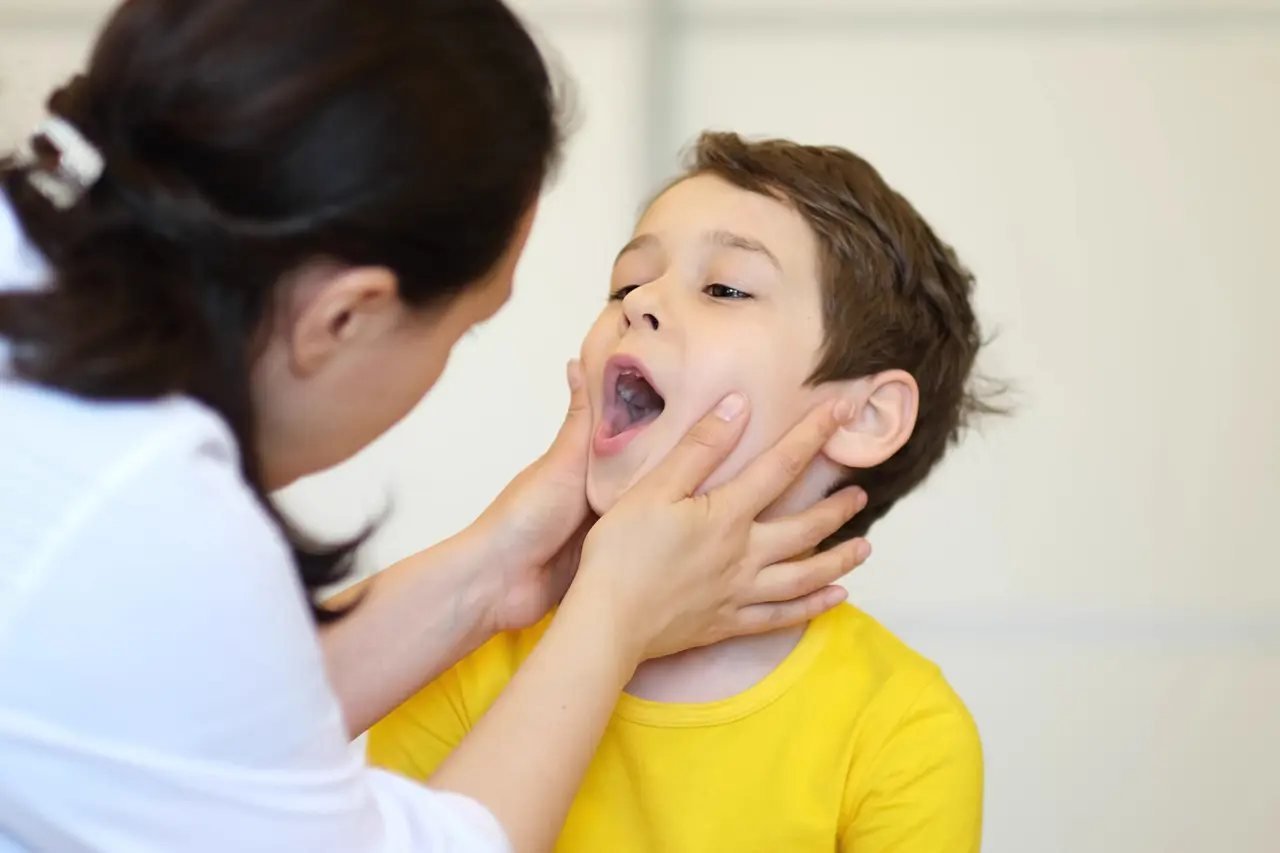
If you recognize several of these signs, the next step is a professional evaluation. Start with your pediatrician, who may refer to an ear, nose, and throat specialist, a sleep physician, or a dentist trained in airway and sleep. A sleep study is the standard way to confirm sleep apnea and gauge its severity.
An evaluation looks at the airway, the tonsils and adenoids, the shape of the jaws, and how the child breathes and sleeps. From there, treatment is matched to the cause and may range from addressing allergies, to removing enlarged tonsils, to non-surgical appliance therapy that develops the airway. Our guide to sleep apnea treatment options walks through how these choices compare. If your child shows the signs described here, you can schedule a free consultation to have their airway and sleep assessed. Catching these patterns early, while the jaws are still growing, often makes them simpler to address.