Summary: TMJ pain does not always begin in the jaw joint. For many people, a narrow airway and chronic mouth breathing shift tongue posture and jaw development, which strains the temporomandibular joint over time. Looking at how you breathe, not just the joint itself, is often the missing piece in finding lasting relief from jaw pain.
What this article covers
- What TMJ pain actually is
- The airway connection: how breathing shapes the jaw
- Mouth breathing and the chain reaction in your jaw
- Signs your jaw pain might start with your airway
- Why treating only the joint often falls short
- An airway-first approach to lasting jaw relief
- Frequently asked questions
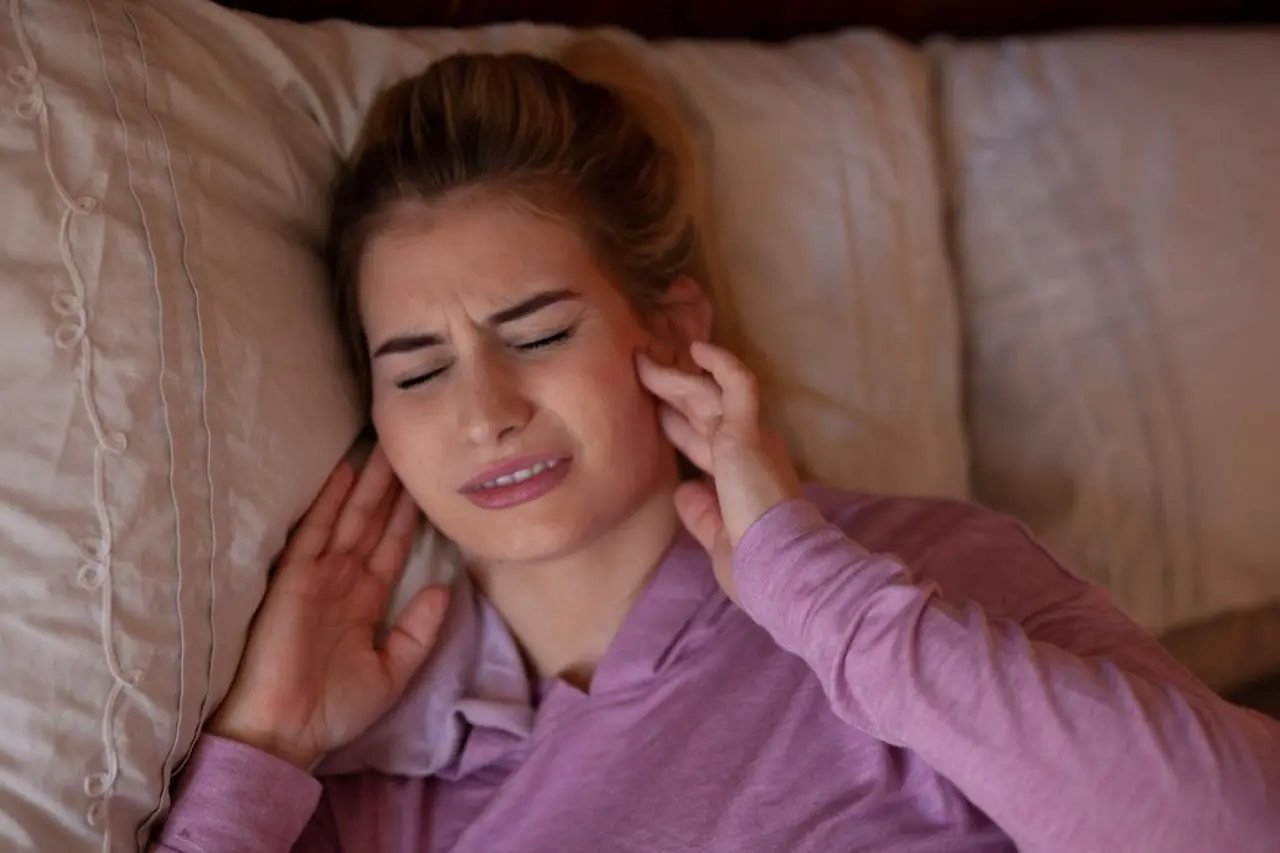
If you have lived with clicking, popping, morning jaw soreness, or headaches that never quite get explained, you have probably been told it is stress or teeth grinding. Those answers are not wrong, but they are often incomplete. A growing number of dentists who study sleep and breathing see the jaw joint as the end of a longer chain, one that frequently starts with how air moves through the airway at night. When the airway is narrow and the mouth takes over for the nose, the muscles and bones around the jaw adapt in ways that can quietly set the stage for pain. This article walks through that connection and what it means for real, lasting relief.
What TMJ pain actually is
TMJ pain refers to discomfort in the temporomandibular joint, the hinge that connects your lower jaw to your skull just in front of each ear. When that joint and the muscles around it are strained or misaligned, the result can be clicking, aching, limited movement, and pain that spreads into the head, neck, and shoulders.
The umbrella term for these problems is temporomandibular disorder, or TMD. According to the National Institute of Dental and Craniofacial Research, TMD is not a single condition but a group of disorders affecting the joint and the muscles that control jaw movement. Symptoms range from a subtle click when you chew to constant tension headaches and difficulty opening the mouth fully. Because the pain radiates so widely, TMD is often mistaken for migraines, ear problems, or neck strain, which is one reason so many people go years without a clear explanation.
The airway connection: how breathing shapes the jaw
Your airway and your jaw develop together. When the airway is narrow, often because the upper and lower jaws are underdeveloped, the body compensates in ways that change jaw position and muscle balance. Over time, those compensations place uneven stress on the temporomandibular joint and can feed into the pain patterns of TMD.
The link starts with anatomy. A person whose jaws did not develop to their full width tends to have less room for the tongue and a more restricted airway. To keep breathing easier, the body may push the head forward, drop the lower jaw, and open the mouth, especially during sleep. This is the same underdeveloped structure that drives snoring and obstructive sleep apnea, which is why jaw pain and disordered breathing so often show up in the same person. You can see how the airway is assessed in our overview of sleep apnea and snoring.
Mouth breathing and the chain reaction in your jaw
Chronic mouth breathing is one of the clearest links between the airway and jaw pain. When the mouth stays open to breathe, the tongue drops from the roof of the mouth, the facial muscles work out of balance, and the jaws are nudged into positions they were not designed to hold. That imbalance travels straight to the joint.
When the tongue no longer rests against the palate, it stops providing the gentle outward pressure that helps guide healthy jaw width. Over years, the result can be narrower arches, crowded teeth, and a bite that no longer meets evenly. An uneven bite forces the jaw muscles to overwork to find a comfortable resting position, and that constant effort is a common source of clenching, grinding, and joint strain. This pattern often begins early, which is why signs of mouth breathing in children are worth taking seriously rather than waiting for them to be outgrown.
Signs your jaw pain might start with your airway
If your jaw pain comes with signs of disrupted breathing, the airway may be part of the picture. When these clues appear together, treating the jaw alone rarely settles the problem for good.
Patterns that suggest an airway component include waking with a sore or tired jaw rather than developing pain through the day, snoring or gasping reported by a partner, frequent morning headaches, noticeable teeth grinding or worn tooth surfaces, a dry mouth on waking, and a long-standing habit of breathing through the mouth. None of these confirms the cause on its own, but together they point toward a breathing pattern that deserves a closer look alongside the joint itself.
Why treating only the joint often falls short
Many common TMD treatments focus on managing symptoms at the joint: night guards to cushion grinding, muscle relaxers, anti-inflammatories, or injections to quiet overactive muscles. These can bring real short-term relief, but if a narrow airway is driving the muscle overactivity, the underlying pressure on the joint remains and symptoms tend to come back.
A standard night guard, for example, protects the teeth from grinding but does not change why the jaw is clenching in the first place. If the clenching is the body’s response to a restricted airway, the guard treats the effect and leaves the cause in place. This is the difference between managing a symptom and addressing its source, and it is the reason our approach to facial pain and TMJ care starts by looking at the airway and the way the jaws developed, not only at the joint that hurts.
An airway-first approach to lasting jaw relief
An airway-first approach treats the jaw pain and the breathing problem as parts of the same picture. Instead of only cushioning the joint, the goal is to widen and develop the airway so the jaw can settle into a more balanced, comfortable position. This is done with non-surgical, custom appliance therapy and supporting muscle retraining.
Custom oral appliances are designed to gently guide the development of the upper and lower jaws, creating more room for the tongue and a more open airway. The American Academy of Dental Sleep Medicine recognizes oral appliance therapy as an established, non-surgical option for many people with snoring and obstructive sleep apnea. Alongside the appliance, myofunctional therapy retrains the tongue and facial muscles to rest correctly and to favor nasal breathing, which helps hold the improvements in place. For a closer look at the non-surgical choices available, our guide to sleep apnea treatment options explains how these appliances work. Results vary from person to person, and the best next step is to schedule a free consultation to learn whether an airway-focused approach fits your situation.